Address
Charmvit Tower, 117 Tran Duy Hung Street, Trung Hoa Ward, Cau Giay District, Hanoi, Vietnam
Hotline: (+84) 913.933.593 - (+84) 912.949.393
Email: info@rslglobal.vn
Address
Charmvit Tower, 117 Tran Duy Hung Street, Trung Hoa Ward, Cau Giay District, Hanoi, Vietnam
Hotline: (+84) 913.933.593 - (+84) 912.949.393
Email: info@rslglobal.vn


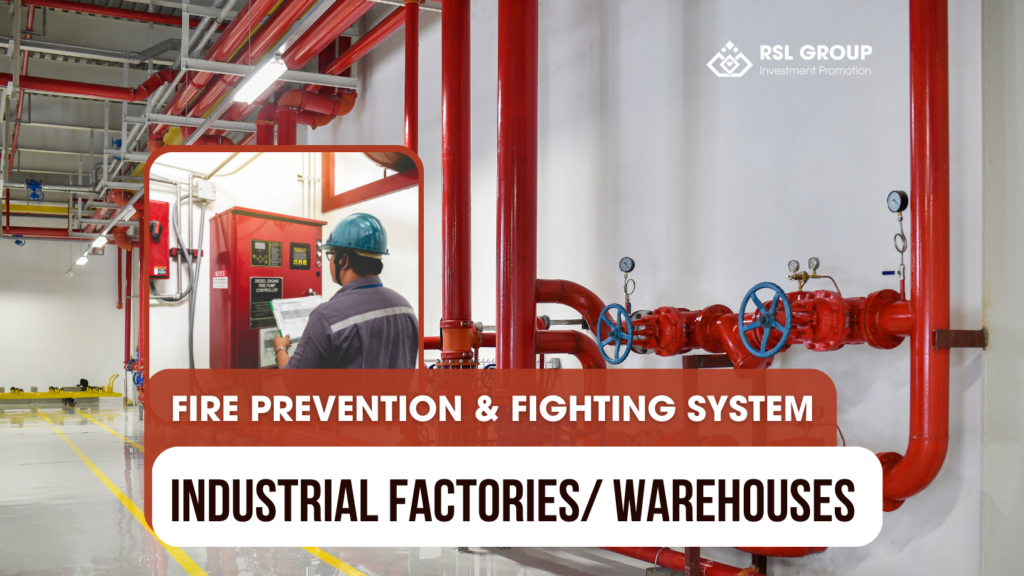
RSL Group – Industrial factories and warehouses are places where large quantities of raw materials and goods are stored, posing a high risk of fire and explosion. Therefore, ensuring fire prevention and fighting system (FPF) safety in factories/warehouses and industrial parks is a crucial activity for every investor. The article below will provide detailed information about the FPF system in industrial factories and warehouses.
Typically, an FPF system for industrial factories and warehouses is generally described as comprising both an internal and an external FPF system. The external system refers to the infrastructure outside the factories/warehouses and is related to the technical infrastructure of the industrial park, such as water hydrants, water supply sources and internal traffic. The internal system pertains to the infrastructure inside the factories/warehouses, including fire extinguishers and ceiling display mounting pipe systems.
According to Article 10 of Decree 136/2020/ND-CP, requirements for formulation of or amendment to planning for construction of cities, economic zones, industrial parks, industry clusters, export-processing zones, hi-tech parks and other functional zones according to the Law on Planning, the following fire protection and firefighting (FPF) requirements must be ensured:
Moreover, industrial parks must be equipped with outdoor FPF equipment such as outdoor fire hydrants, water supply points for fire trucks, fire extinguishers, fire equipment boxes, fire hose reels and fire nozzles.
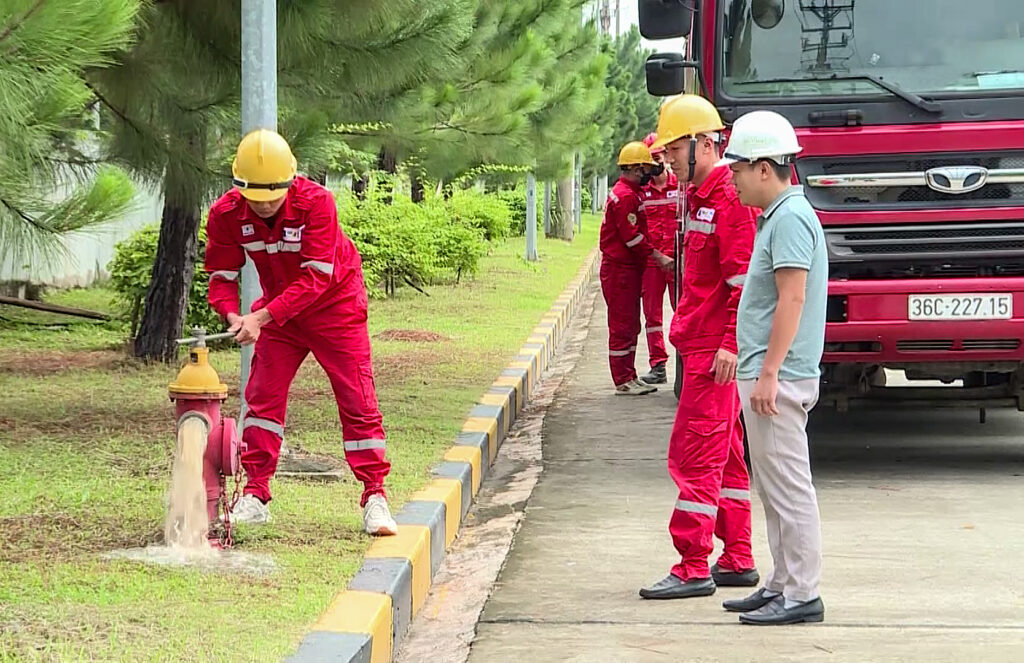
Inspection of the fire hydrant system in Ba Thien II Industrial Park
Additionally, regarding firefighting vehicles and isolated respirators, industrial parks, industrial clusters, export processing zones and high-tech parks need to be equipped as follows:
| Object | Scale | Fire trucks (units) | Fire pumps | Isolated respirators |
| Industrial parks, export processing zones, high-tech parks | Total area over 300 ha | 3 | At least 3 sets | |
| Industrial parks, export processing zones, high-tech parks | Total area from over 150 ha to 300 ha | 2 | ||
| Industrial parks, export processing zones, high-tech parks, industrial clusters | Total area from 50 ha to 150 ha | 1 | ||
| Industrial parks, export processing zones, high-tech parks, industrial clusters | Total area less than 50 ha | 1 |
Source: Draft National Standard TCVN 3890:2021 on Fire Protection – Fire Protection Equipment and Systems for Buildings and Structures
The internal FPF system will include: fire alarm system and fire fighting system. In industrial parks, the most common firefighting systems applied is the wall-mounted firefighting system, automatic sprinkler system and smoke extraction system.
The fire alarm system is a system that detects the outbreak of fire and alerts both the workers in industrial parks and the fire brigade. The most commonly used fire alarm system in industrial parks nowadays is the automatic fire alarm system, consisting of three main components:
The wall-mounted fire fighting system for factories is a system where pipes and equipment are installed close to the walls, emergency staircases and elevator corridors. The water-based fire fighting system includes a pump station supplying water connected to the wall-mounted water intake system. In a fire incident, simply opening the shut-off valve will immediately release a high-pressure stream of water for firefighting. At that point, the water pressure will decrease and the water pump system will automatically activate to supply firefighting water.
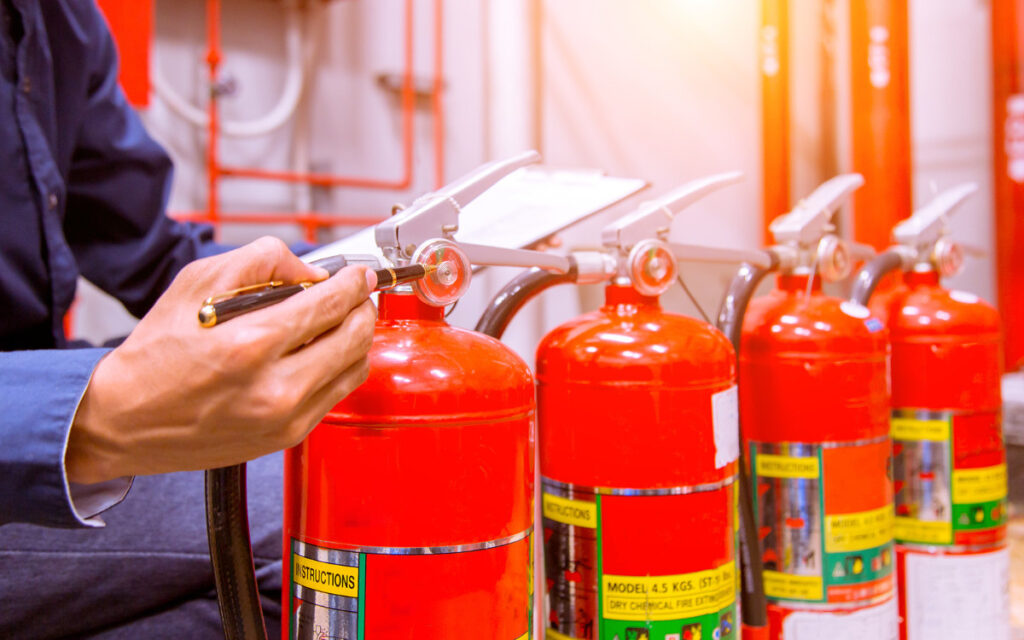
Operating principle of the wall-mounted fire fighting system: To ensure that the water pressure remains constant under normal conditions, the pumps are controlled by an automatic central system. When the pressure gradually decreases, the pressure booster pump will automatically operate to supply water to the pipes, compensating for the lost pressure. In the event of a sudden drop in water pressure due to the opening of a sprinkler head, the main pump will activate to provide firefighting water, and a signal will be sent to the alarm center as well as other alarm devices simultaneously.
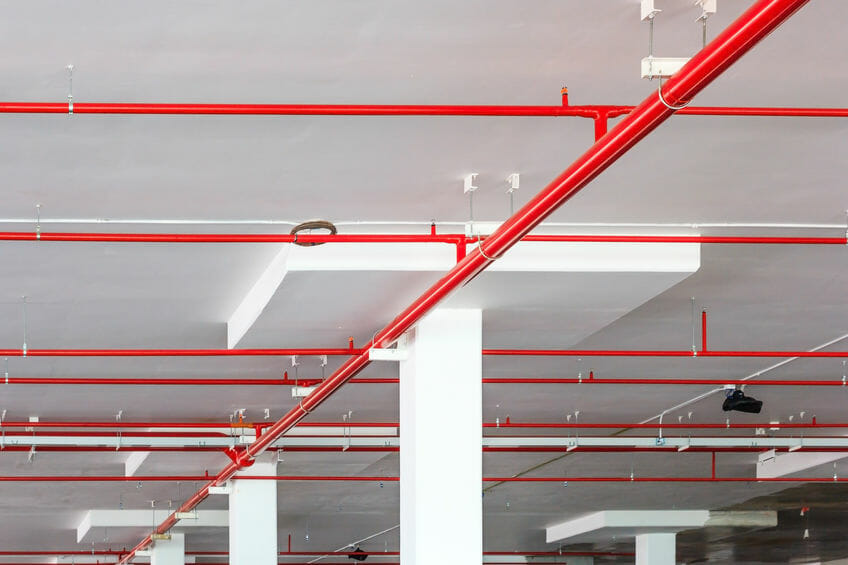
The automatic fire sprinkler system (AFSS) is a system that uses closed nozzles (sprinkler heads) that are always on standby 24/7. When an incident occurs and the temperature rises to a certain value, the sprinkler head will activate, the thermal sensor will break and the system will operate. Therefore, the sprinkler system can only point-specific firefighting (localized firefighting) within a certain protected area.
Components of the automatic fire sprinkler system:

Operating principle of the sprinkler system: The system interconnects pipelines running underground and above ground. Normally, the pipeline network is maintained at a certain working pressure, which is achieved by the booster pump. Due to external factors, there is always some water loss from the pipeline network back to the water supply source due to valve leakage. When this happens, the pressure in the system will slowly decrease to the threshold activation pressure of the pressure switch controlling the booster pump. This sends an electrical signal to the central control panel, which will then activate relays to supply power to the booster pump to replenish the lost water in the pipeline and generate a signal indicating the booster pump’s operating mode. When the pressure in the fire pipeline reaches the initial working pressure, the pressure switch will hit its cutoff threshold, sending an electrical signal back to the control center, and through the relays, it will cut off the power supply to the booster pump, causing the booster pump to shut off automatically.
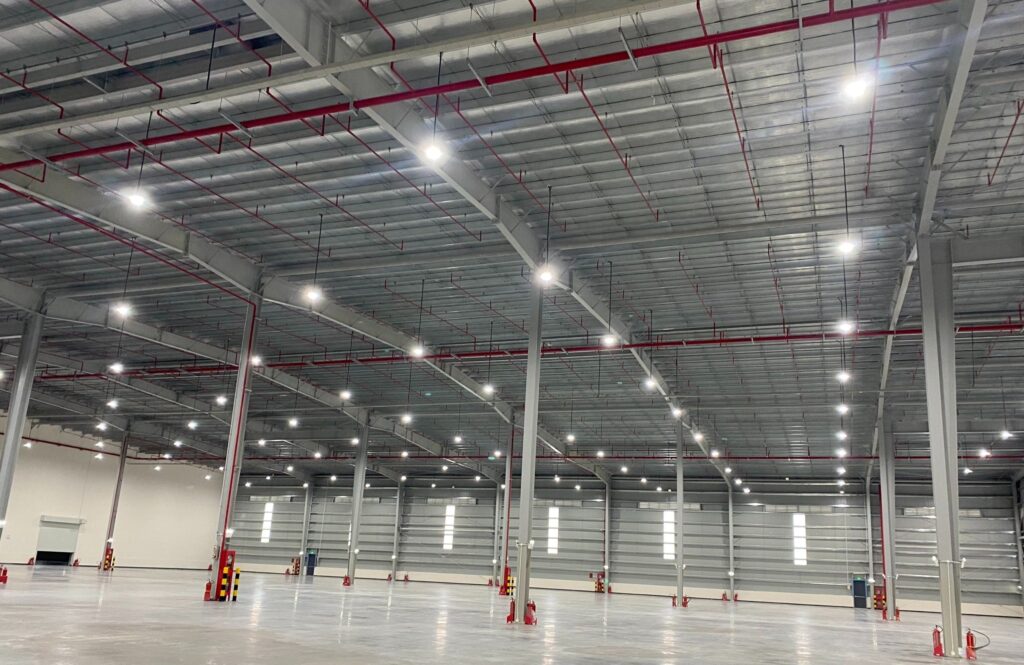
A factory with wall-mounted firefighting and Sprinkler system
The smoke extraction system for fire prevention in factories/warehouses is composed of many components with specific functions and tasks:
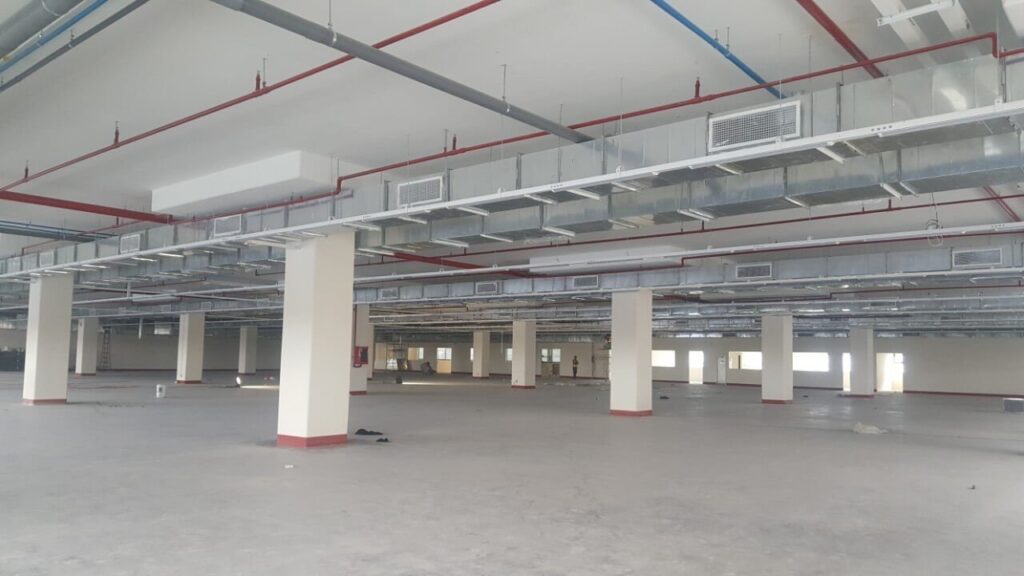
Ensuring fire safety in factories/warehouses and industrial parks is a key responsibility of investors as well as infrastructure developers, aimed at protecting the safety of people and assets of the enterprise as well as creating a favorable environment to attract investment. Currently, most of the procedures to bring warehouse facilities into operation depend on the completion of fire safety-related procedures.
Above, RSL Group has provided readers with useful information about the components, characteristics and operating principles of fire prevention and fighting systems in industrial factories and warehouses. If you have any questions, please contact our hotline for assistance. Check out more articles from RSL Group here.
Source: Redsunland.vn